My essay from the catalog:
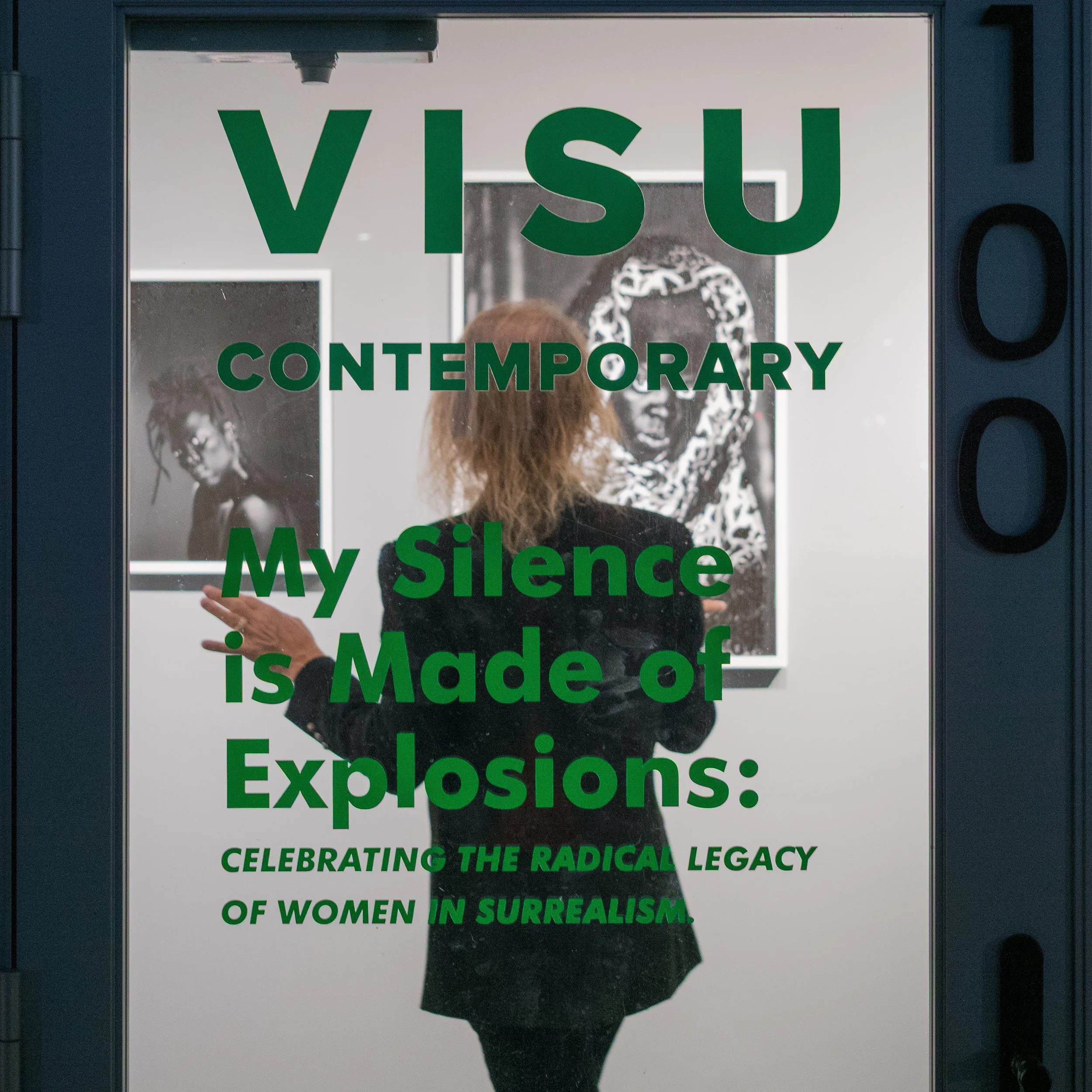
My Silence Is Made of Explosions emerges from a lifelong dialogue with surrealism and photography—one that began in earnest with the discovery of L’Amour Fou: Photography and Surrealism, published in 1985 alongside the exhibition of the same name. At the time, scholarship on surrealist photography was remarkably sparse, despite the medium’s central role in destabilizing reality, perception, and desire within the movement. Of particular significance was the fact that the catalogue and exhibition were shaped entirely by women writer-curators, foregrounding perspectives that had long been marginalized in accounts of surrealism. Among them was Dawn Ades, who would later contribute an essay to The Subversive Eye: Surrealist and Experimental Photography from the David Raymond Collection, accompanying the exhibition of works from my collection at the Dalí Museum. That continuity—between women scholars, women artists, and the radical rethinking of how we see has remained foundational to my engagement with surrealism.
While collecting photographs from the 1920s through the 1940s, I found myself increasingly drawn to contemporary artists whose practices carried what I can only describe as a surreal thread: a refusal of photographic neutrality and an insistence on vision as psychic, political, and embodied. Most importantly, the works challenged the way I see and perceive “reality”. Almost without exception, these artists were women. Over time, this was no longer coincidence but recognition. I came to understand these works not as echoes of surrealism, but as its continuation: adaptive, insurgent, and alive.
The artists brought together in My Silence Is Made of Explosions extend surrealism not through quotation or homage, but through method and conviction. Zanele Muholi’s self-portraits deploy repetition, masquerade, and intensity to fracture fixed identities, turning the self into both subject and symbol while confronting the politics of visibility, erasure, and survival. Aida Muluneh constructs allegorical worlds where saturated color, geometry, and ritual operate like dream-logic, collapsing time, history, and myth into potent visual codes. Tanya Franco Klein stages the self within uncanny, cinematic spaces, using estrangement and doubling to expose the psychological unease embedded in contemporary life and gendered expectation.
Elena Dorfman’s photographs explore the body as a psychological and emotional landscape, where intimacy, vulnerability, and strength blur into the surreal. Patricia Voulgaris manipulates perception through layered imagery and formal disruption, destabilizing reality in ways that recall surrealist strategies of fragmentation, chance, and visual dislocation. Pixy Liao uses performance and role reversal to subvert the gaze, transforming private relationships into surreal negotiations of power, desire, and authorship. Jen DeNike draws on movement and myth, creating images that function like modern incantations where the body becomes a conduit between inner and outer worlds, memory and transformation. Working collaboratively through a surrealist, score-based process, Jen DeNike and Barbara von Portatius produce collages that function as exquisite fragments assembled through intuition, displacement, and a shared engagement with the unconscious.
To speak of surrealism today is also to speak of the present moment; a moment defined by fractured realities, an overload of images, contested truths, and heightened struggles over who is seen, who speaks, and who/what is believed. In an era saturated with surveillance, spectacle, and algorithmic vision, photography no longer simply records the world; it actively participates in shaping it. The artists in this exhibition understand this condition intimately. Their work challenges the viewer with an invitation; insisting on pausing, questioning and contemplating strategies that feel urgently surreal in a world that demands and rewards constant visibility yet punishes those who claim it on their own terms.
Together, these works position the camera as a detonator of dreams. Here, silence does not signify absence, but pressure—an accumulation of lived experience, imagination, and refusal waiting to erupt. In My Silence Is Made of Explosions, surrealism is not a historical artifact but a living method: one that continues to offer tools for resistance, transformation, and radical seeing.
Carried forward by women who insist on the right to see and be seen on their own terms, this exhibition affirms surrealism’s enduring power to rupture the present and open pathways toward other futures.
(Originally published in the catalog My Dreams Are Made Of Explosions published by Visu Contemporary in 2026.)